The Israeli Airstrike on Aleppo: Unpacking the Consequences
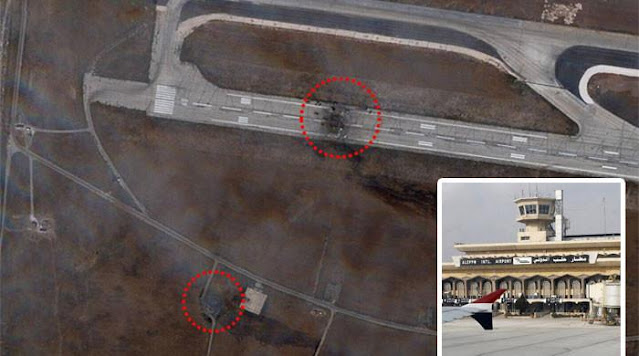
In the ever-unfolding tapestry of international conflicts, the Middle East has been a region frequently marred by tensions and skirmishes. The recent attack by Israeli planes on the Syrian city of Aleppo, which resulted in the destruction of the airport's runway, is another episode in a long-running saga of strife and geopolitical maneuvering. This article aims to shed light on the circumstances surrounding this attack, its potential implications, and the broader context within which it occurred.
The Recent Airstrike in Aleppo
On [Date], Israeli aircraft conducted an airstrike on the Syrian city of Aleppo. The primary target of the strike was the Aleppo International Airport. This airstrike resulted in significant damage to the airport's runway, rendering it inoperable and disrupting civilian air traffic.
The attack was part of a series of airstrikes that Israel has conducted in Syria over the years. The Israeli government has justified these strikes as preemptive actions to prevent the transfer of advanced weaponry to militant groups such as Hezbollah, which is based in Lebanon but receives support from Iran. Israel views the proliferation of advanced weaponry in the hands of hostile non-state actors as a direct threat to its national security.
Geopolitical Context
The Middle East has long been a region rife with complex and intertwined conflicts. In the case of the Israeli airstrikes on Syria, several key geopolitical factors must be considered:
The Syrian Civil War: The ongoing Syrian civil war, which began in 2011, has turned the country into a battleground for various regional and international actors. Syria's instability has provided opportunities for Israel to pursue its security objectives through targeted airstrikes, as the central government's control has waned.
The Iranian Influence: Iran, a regional power and a staunch ally of the Syrian government, has been a major player in the Syrian conflict. Israel sees Iran as a significant threat and is deeply concerned about its influence in Syria. Tehran's support for militant groups and its aspiration to establish a permanent military presence in Syria have prompted Israeli actions aimed at countering these developments.
Hezbollah's Role: The Lebanese militant group Hezbollah is another key factor. Supported by Iran, Hezbollah poses a considerable threat to Israel and has been involved in conflicts with the Israeli military in the past. Israel's airstrikes on Syria are often aimed at preventing the transfer of advanced weapons and technology to Hezbollah.
 |
| The Israeli Airstrike on Aleppo: Unpacking the Consequences |
Russian Involvement: Russia's military intervention in Syria in 2015 significantly altered the dynamics of the conflict. Russia's presence has complicated Israeli military operations, as Israel and Russia maintain direct communication channels to avoid accidental clashes in Syrian airspace.
International Law and Sovereignty: The Israeli airstrikes raise questions about the violation of Syrian sovereignty and international law. While Israel argues that these actions are necessary for its national security, they are often criticized by international bodies and some nations as violations of Syria's sovereignty.
Implications of the Airstrike
The recent airstrike on Aleppo's airport carries several potential implications:
Escalation of Regional Tensions: This strike is likely to further escalate regional tensions in the Middle East. It could provoke responses from the Syrian government, its allies, or non-state actors sympathetic to its cause.
Impact on Civilian Population: The destruction of Aleppo's runway has significant consequences for civilians. Disruption of the airport affects not only domestic but also international travel, hampering humanitarian efforts and economic activities.
Continued Israeli Military Actions: This airstrike underscores Israel's continued willingness to take military action to safeguard its national security interests. Such actions could trigger further violence in the region.
Diplomatic Challenges: The attack poses diplomatic challenges for the international community, as it may need to mediate and negotiate to prevent further escalations and establish a lasting peace.
Humanitarian Concerns: The Syrian civil war has already led to a humanitarian crisis with millions of displaced people and casualties. The recent airstrike adds to the ongoing suffering of the Syrian population.
International Response
In the wake of the airstrike on Aleppo, the international community has responded with varying degrees of concern and condemnation. The United Nations and several countries have called for restraint and respect for Syria's sovereignty.
The United States, which has maintained a military presence in the region, expressed concern about the attack and urged all parties to avoid actions that might increase tensions. Russia, a key player in the Syrian conflict, expressed regret over the airstrike, emphasizing the need to respect Syria's sovereignty.
The European Union (EU) condemned the airstrike, highlighting the importance of preventing further military escalation in the region. The EU called for dialogue and a political solution to the Syrian conflict.
Syria has formally protested the airstrike, considering it a violation of its territorial integrity and sovereignty. The Syrian government argues that such actions only further complicate efforts to achieve a political resolution to the conflict.
The Way Forward
The ongoing tensions and military actions in Syria underscore the complexity of the regional conflicts and the need for a comprehensive and sustainable solution. Several key steps can be taken to mitigate the situation:
Diplomatic Dialogue: Encouraging diplomatic dialogue between all relevant parties is crucial. This includes negotiations involving Syria, Iran, Israel, and other regional actors.
Respect for International Law: Upholding the principles of international law, including respect for state sovereignty, is essential in preventing further escalations.
Humanitarian Support: Addressing the humanitarian crisis in Syria remains paramount. The international community should continue to provide aid and support to those affected by the conflict.
Conflict Resolution: A comprehensive political solution that addresses the root causes of the Syrian conflict is needed. This should involve negotiations between the Syrian government and opposition groups, with the goal of achieving lasting peace and stability.
Regional Cooperation: Encouraging cooperation among regional powers, such as Iran and Israel, to address their security concerns and reduce the risk of military confrontations.
Conclusion
The recent Israeli airstrike on Aleppo's airport highlights the ongoing complexities and tensions in the Middle East, particularly in the context of the Syrian civil war. The situation underscores the need for diplomatic solutions, respect for international law, and international efforts to address the humanitarian crisis. Achieving lasting peace in the region remains a daunting but necessary goal that will require sustained diplomatic and political efforts.


Comments
Post a Comment